 2
2
 0
0
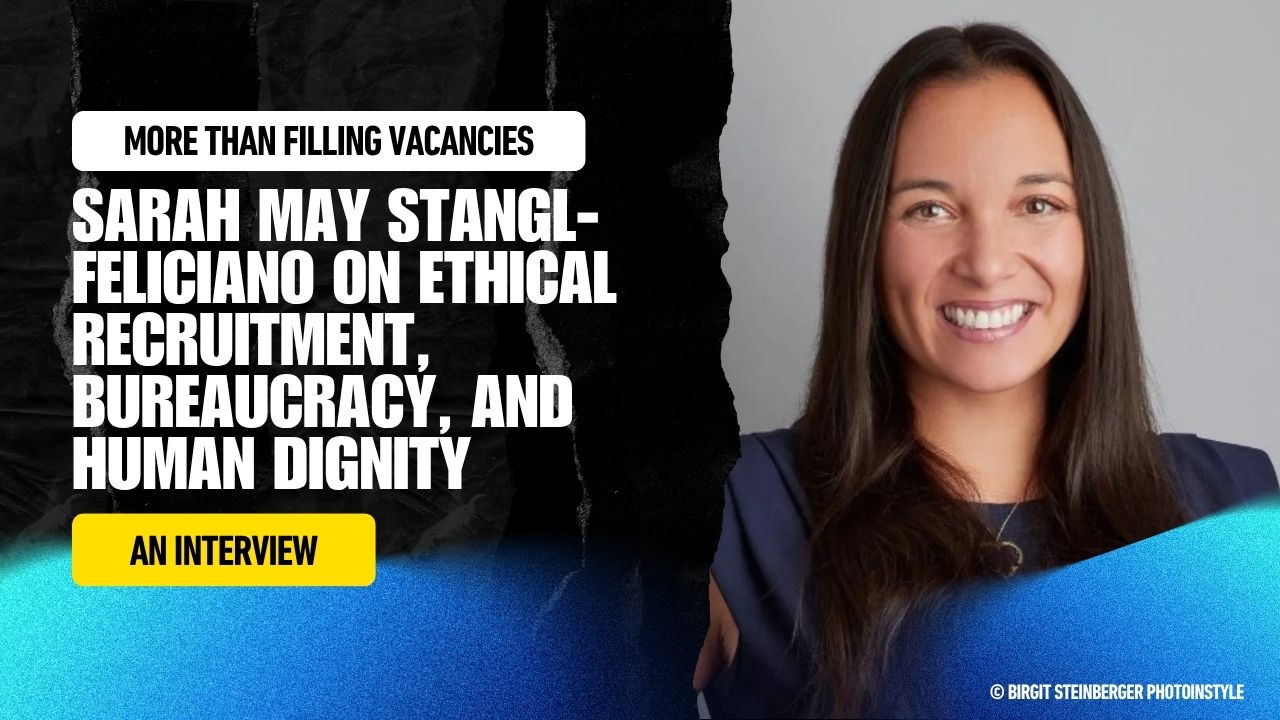
When Sarah May Stangl-Feliciano founded 24HelfendeHände, she wasn’t just looking to solve a numbers problem in the Austrian job market. She saw an opportunity to transform how international recruitment is conducted—moving away from transactional placements toward a model rooted in legal security, mutual respect, and long-term care.
By connecting highly trained Filipino workers with Austrian employers in healthcare, hospitality, and industry, 24HelfendeHände addresses urgent local staff shortages while providing candidates with transparent, life-changing career pathways. Yet, coordinating between two distinct legal systems—involving everything from the Philippine Department of Migrant Workers to Austrian provincial authorities—demands immense patience, precision, and systemic foresight.
Austrian Press discussed with Sarah May Stangl-Feliciano the daily realities of navigating Austrian bureaucracy, the urgent need for streamlined nurse recognition programs, and her vision for a recruitment model where worker protection and economic necessity go hand in hand.
The Interview
Austrian Press: What inspired you to establish Agentur 24HelfendeHände, and what motivated you to focus on connecting Filipino workers with employment opportunities in Austria?
Sarah May Stangl-Feliciano:
The idea behind 24HelfendeHände Personalagentur GmbH was born from both personal conviction and economic necessity. Austria faces a growing shortage of qualified workers, particularly in healthcare, hospitality, tourism, industry, and other essential sectors. At the same time, the Philippines has many highly skilled professionals seeking long-term career opportunities abroad.
Having strong connections to both Austria and the Filipino community, I saw the opportunity to build a bridge between these two countries. My goal was never simply to fill vacancies, but to create an agency that approaches international recruitment with responsibility toward workers, employers, and society.
Filipino professionals are internationally respected for their qualifications, resilience, adaptability, and strong work ethic. However, relocating to another country involves much more than signing an employment contract. It requires legal security, honest guidance, cultural preparation, language support, and continuous assistance throughout the entire process.
That is why I founded 24HelfendeHände—to create sustainable employment opportunities where Austrian employers gain dependable, qualified staff while Filipino workers receive fair, transparent, and well-supported pathways to build their future in Austria.
Austrian Press: Your agency works between two countries with different legal and administrative systems. What have been the biggest challenges in navigating Austria’s bureaucratic requirements, and how have you managed them?
Sarah May Stangl-Feliciano:
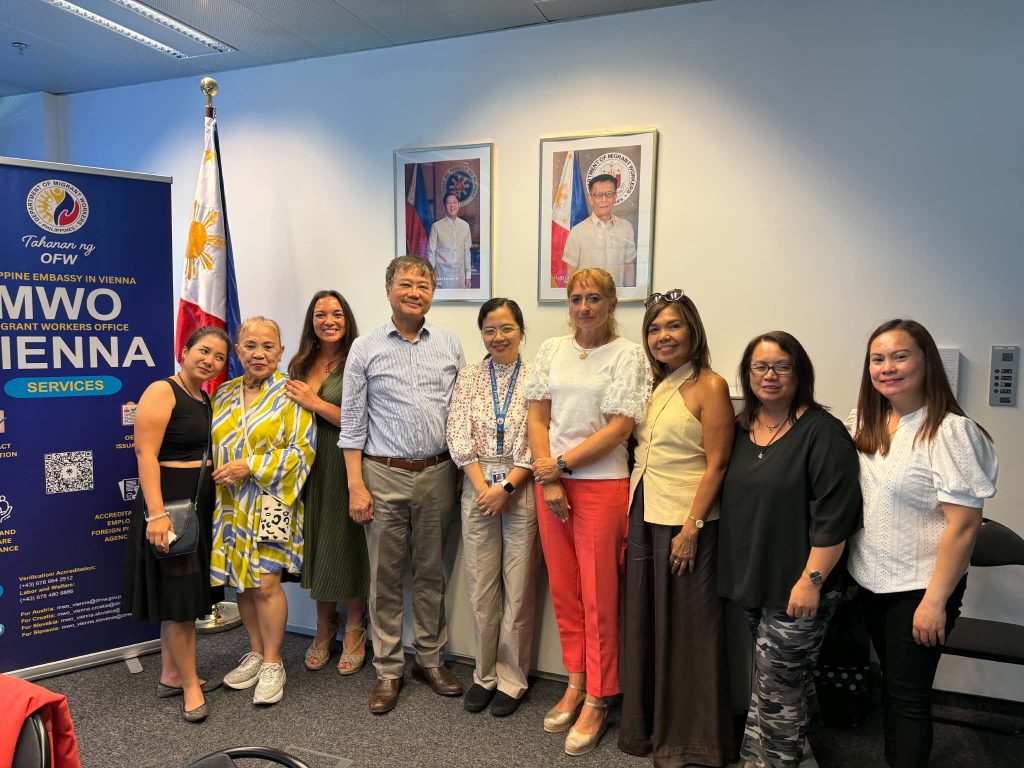
International recruitment is a complex process involving numerous authorities and institutions. Depending on the profession, we work with immigration authorities, the Public Employment Service (AMS), provincial governments, educational institutions, professional recognition bodies, embassies, the Philippine Department of Migrant Workers, and the Migrant Workers Office.
Each institution has different requirements, documentation standards, and processing times. Since many procedures depend on one another, even a small delay—whether in qualification recognition, residence permits, employer accreditation, or job order approval—can affect the entire recruitment process.
Another challenge is that regulations may be interpreted differently depending on the province, profession, or individual case. This creates uncertainty for both employers and candidates.
We address these challenges through careful preparation, transparent documentation, close communication with all authorities, and continuous follow-up. Every case is individually planned and monitored. Our role extends far beyond recruitment—we coordinate between employers, candidates, Philippine recruitment partners, authorities, and educational institutions to ensure the process runs as smoothly as possible.
Austrian Press: International recruitment involves visas, permits, and labour regulations. Are there any areas within Austria’s system that could be simplified while still protecting workers?
Sarah May Stangl-Feliciano:
Absolutely. Worker protection must always remain the highest priority, and simplification should strengthen—not weaken—legal safeguards.
One major improvement would be a standardized and coordinated recruitment process. Currently, employers and candidates often submit the same documents to several institutions. A centralized digital platform where documents could be uploaded once and securely shared among relevant authorities would significantly reduce administrative delays.
More predictable processing times would also benefit everyone. Employers need reliable timelines for workforce planning, while candidates need certainty regarding employment, visas, accommodation, and financial preparation.
For regulated professions, especially nursing, the recognition and nostrification process should be better coordinated with immigration and employment procedures. Austria also needs more places in supplementary training programs. Many qualified nurses are ready to work but must wait because training capacity is limited.
Ethical recruitment becomes more efficient when procedures are transparent, digital, coordinated, and predictable, while maintaining strong protections against exploitation and illegal recruitment.
Austrian Press: How does 24HelfendeHände prepare Filipino workers not only for their jobs, but also for adapting to Austrian culture and workplace expectations?
Sarah May Stangl-Feliciano:
Successful recruitment begins long before departure and continues well after the employee arrives in Austria.
We carefully select candidates based on their professional qualifications, experience, language skills, motivation, and personal suitability. Together with our accredited partners in the Philippines, we ensure they understand the expectations of Austrian employers.
Language preparation plays a central role. Beyond German grammar, we focus on practical workplace communication with colleagues, supervisors, patients, residents, guests, and customers.
We also prepare candidates for Austrian workplace culture, including punctuality, direct communication, documentation standards, occupational safety, personal responsibility, and data protection.
Equally important is cultural orientation. Candidates receive guidance on Austrian daily life, housing, public transportation, healthcare, banking, taxation, climate, and social customs. After arrival, we continue supporting them with registration, residence documentation, accommodation, insurance, and other administrative requirements.
Our commitment does not end once a candidate starts working. We remain available to both employees and employers to help resolve any challenges and support successful long-term integration.
Austrian Press: Looking ahead, what is your vision for 24HelfendeHände, and what support would you like to see from Austrian institutions?
Sarah May Stangl-Feliciano:
My vision is for 24HelfendeHände to become one of the most trusted and responsible bridges between Filipino professionals and European employers.
We plan to continue developing sustainable recruitment programs in healthcare, hospitality, tourism, industry, logistics, and other sectors experiencing labour shortages. Our focus is not rapid expansion but building a company known for quality, transparency, legal compliance, and respect for human dignity.
In the future, we aim to support candidates throughout their entire journey—from recruitment and language training to qualification recognition, arrival, onboarding, career development, and long-term integration.
I also hope Austrian institutions will strengthen cooperation between immigration authorities, recognition bodies, educational institutions, employers, and ethical recruitment agencies. Agencies with proven compliance and worker protection standards should be more actively involved in discussions on labour migration.
Austria also needs greater capacity for recognising international qualifications, especially in nursing. Recruiting skilled professionals is only effective if they can complete recognition procedures without unnecessary delays.
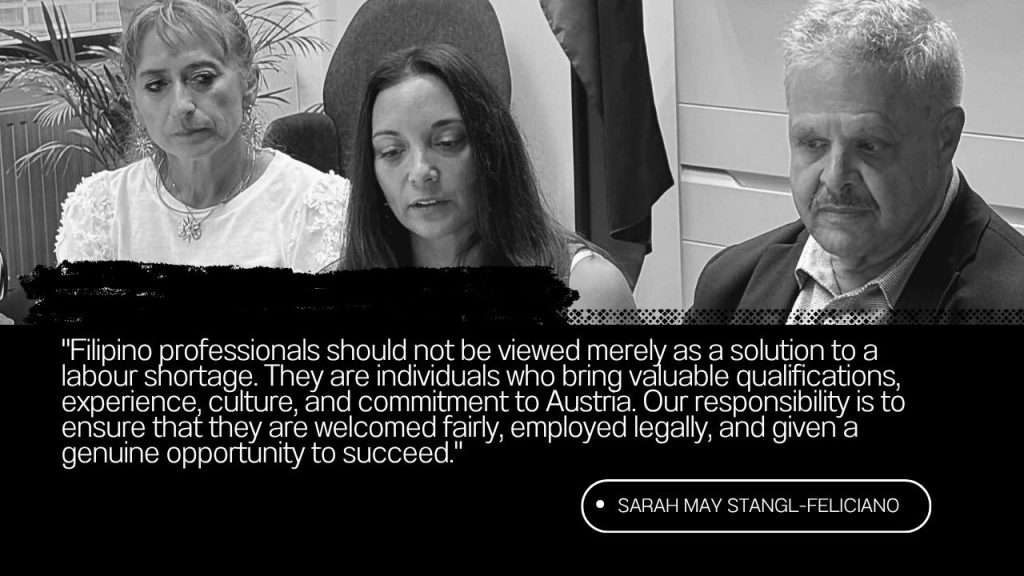
Ultimately, ethical international recruitment succeeds only when governments, authorities, employers, educational institutions, recruitment agencies, and workers collaborate as equal partners. Filipino professionals should never be viewed merely as a solution to labour shortages—they are highly qualified individuals who bring valuable experience, dedication, and cultural diversity to Austrian society.
- Interview conducted by Hector Pascua


This post has already been read 1722 times!